
Love is Paying Attention
Or, the slow work of choosing your life

In early 2022, my wife and I decided to sell our house and move our family of five, including our 6-year-old twin daughters and our 2-year-old son, across the country, from Arizona to Massachusetts.

It had been a decision years in the making. In 2009, long before we were blissfully tired parents, we had taken a month-long road trip along the East Coast and quickly fell in love with New England. It was difficult to describe, but there, we experienced a sense of home and belonging that we didn’t feel in Phoenix, despite both of us having been born and raised there.
For years after we met at NAU in Flagstaff, we lived together in Phoenix, where nearly all our family also lived: brothers, parents, aunts, uncles, cousins—everybody. There were big family get-togethers and holiday gatherings in the backyard. There were camping trips and baby showers and long afternoons in the pool playing basketball.
We had a great life in many respects, but humming beneath our days was the subtle yet growing feeling that the life we led in Phoenix wasn’t the one we would choose for ourselves, had we the option to start from scratch.
Phoenix was where family was, but beyond that, we didn’t care much for it. It was hot and seemed to be getting hotter. It was crowded and seemed to get more crowded every year. Life in Phoenix, for us, felt too fast. Driving on the 101 to work felt like a cortisol-spiked race to start the morning and end the workday.
At some point, we began vacationing in Massachusetts every summer, visiting my wife’s brother, his daughter, and their extended family. Very quickly, going out to New England was the highlight of our year. We stayed for as long as we could, often into late summer or the earliest days of fall. We did all the tourist things—the Freedom Trail, the White Mountains, Plymouth—anything we could find, we did.
And we loved it all.

The feeling we had there went beyond the “I could live here” thought that’s easy to develop on vacation. Of course, when you don’t have the stress of home, and you’re doing new things every day, the novelty of a new place feels like something you could do every day for the rest of your life. But we visited many places across the U.S. and in a few other countries before we had kids, and never felt the same we-probably-need-to-live-here vibe we got in New England.
The feeling was most pronounced when we arrived home. After spending a month in the lush summer greenery of Mass, we’d watch from the airplane as we descended into the hot, sprawling (but organized, I’ll give it that) grid that was Phoenix. And every time, we felt a quiet sense of regret at having to return to a place that we were at some level misaligned with.
Every summer, we did the same thing. Flew to the East Coast, loved how it felt there—physically, emotionally, spiritually—and dreaded the flight back. Dreaded seeing Camelback Mountain as we dropped back into Sky Harbor and our familiar drive home.
Eventually, almost jokingly, we began talking about what it would be like to move to Mass. These conversations were energizing and invigorating in a way that nothing else was. The idea of going to a place that genuinely made us feel connected to our surroundings felt like a dream.
What would it feel like to love the place you lived? We didn’t know.
Over the years, our disconnect with Phoenix grew. The city in which I had grown up felt impersonal, like a backdrop to whatever we were doing in our lives, but never quite a part of it. We hiked in the desert, camped up north, canoed desert lakes and rivers. It was fun, to be sure, and we had years of memorable times with friends and family.
But inside—and at night, brainstorming our future—all we thought about was what life in Massachusetts would be like. By 2021, we had three young kids and the lingering feeling that our life, though amazing in so many ways, didn’t feel like ours. It felt like it had been handed to us, like something we inherited without permission.
The idea of moving across the country and leaving everything and everyone we knew, however tempting, was also daunting. We didn’t want to leave parents and siblings and nieces and nephews; our kids had become close to their cousins.
I was close to my brother, and we had spent the recent pandemic years enjoying socially distanced backyard dinners and outdoor trips so we could all still spend time together. The idea of leaving him, and my mom, and my wife’s family, made me feel guilty for wanting a different life (my dad lived in New York and was firmly in the “we should move” column).
It was a genuinely gut-wrenching scenario.
All this is a roundabout way of saying: for many years, we lived in a purgatory between here and there.
We loved what we had, and made the most of being in Arizona, but knew we were settling for a thing that wasn’t us. We settled because the people we loved were there, and we thought at some level that we had an obligation to keep our restlessness to ourselves, quietly, simply because that’s just the way it was.
We didn’t want to disappoint people. We didn’t want to come across as ungrateful for the life we had. And we recognized how privileged we were to even be in our situation: to be able to even consider a life-altering trajectory like the one before us.
For Christmas 2021, we joined family and rented a cabin in Oak Creek Canyon, one of our favorite places to escape the Valley. We enjoyed the cool Northern Arizona air, hiked, and talked late into the nights.
But there was a noticeable tension in the atmosphere there. It was hard to place, but it was palpable. The holidays weren’t restorative or all that joyous. It felt like we were going through the motions of some mechanical tradition for tradition’s sake. It didn’t feel great.
Pulling out of the cabins and crossing Oak Creek as we left, we looked at each other and realized this was it. It was time to go. We were finally ready.
On the ride home, we contemplated the move. Could we sell the house? We had lived there for nearly 10 years, and it was a good seller’s market. What about the kids? Our daughters were in kindergarten, our son almost two.
They had their cousins and a few friends, but also weren’t established in school the way a third grader might be. If we waited much longer, a cross-country move might not be a popular decision in our household.

Over the next few months, we made pros and cons lists. We made lists of places we’d consider living in Mass—a collection of small towns in and around Westford, where we stayed during our summer vacations.
We scored them on all sorts of criteria, but mostly we wanted a place that was the opposite of Phoenix: small, personal, slow. Our daily lives were so full of kids’ activities and endless household chores that, outside our own nest of chaos, we wanted to be surrounded by calm and quiet.
In the first few months of 2022, I think we knew we’d be moving, but tried to talk ourselves out of it. Eventually, we couldn’t.
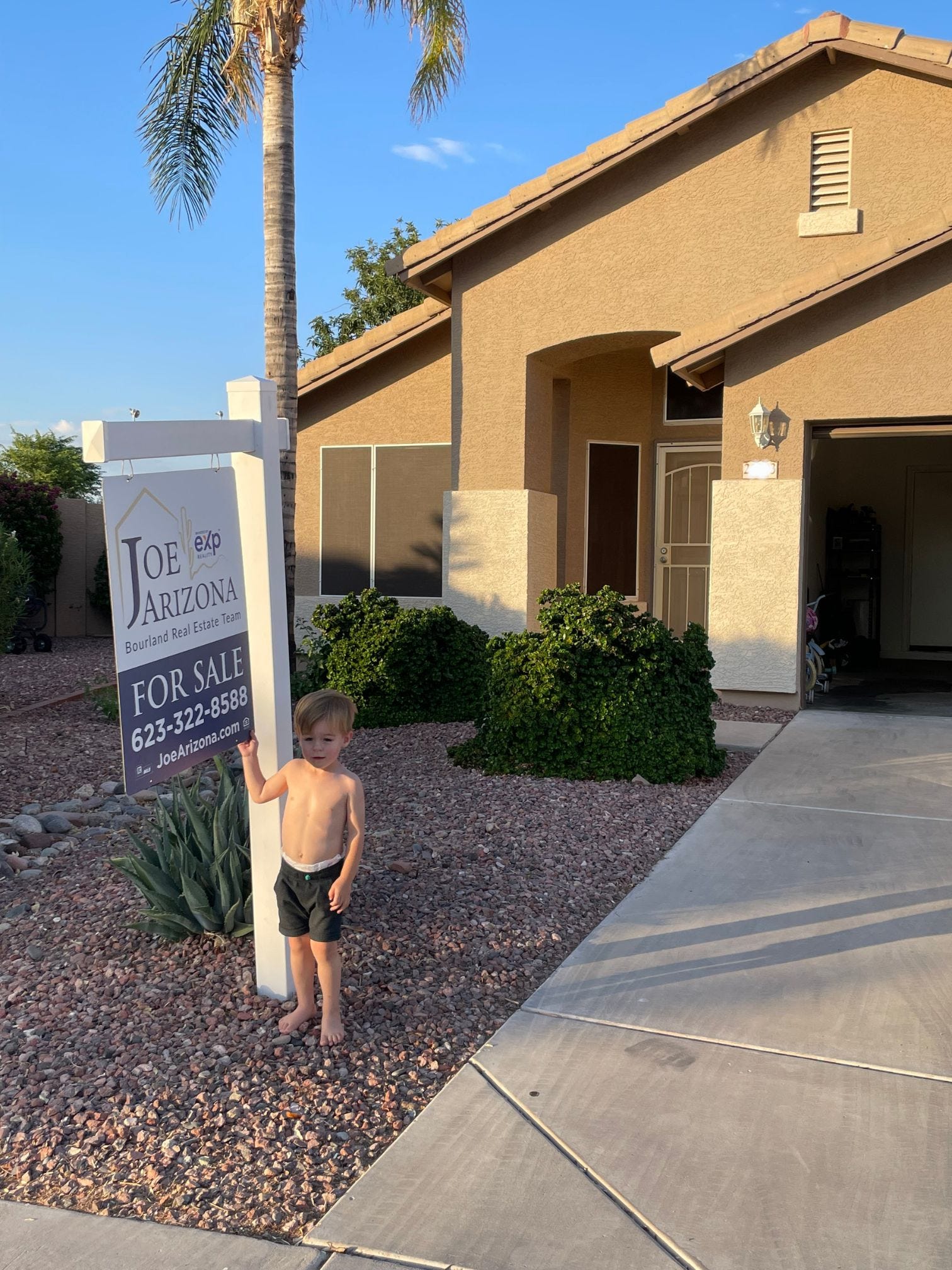
In April, we announced to friends and family that we were selling our house, packing our stuff into moveable pods, and renting an Airbnb in Massachusetts, where we’d give ourselves about one month to find and buy a home and find a school for the kids.
No pressure at all.
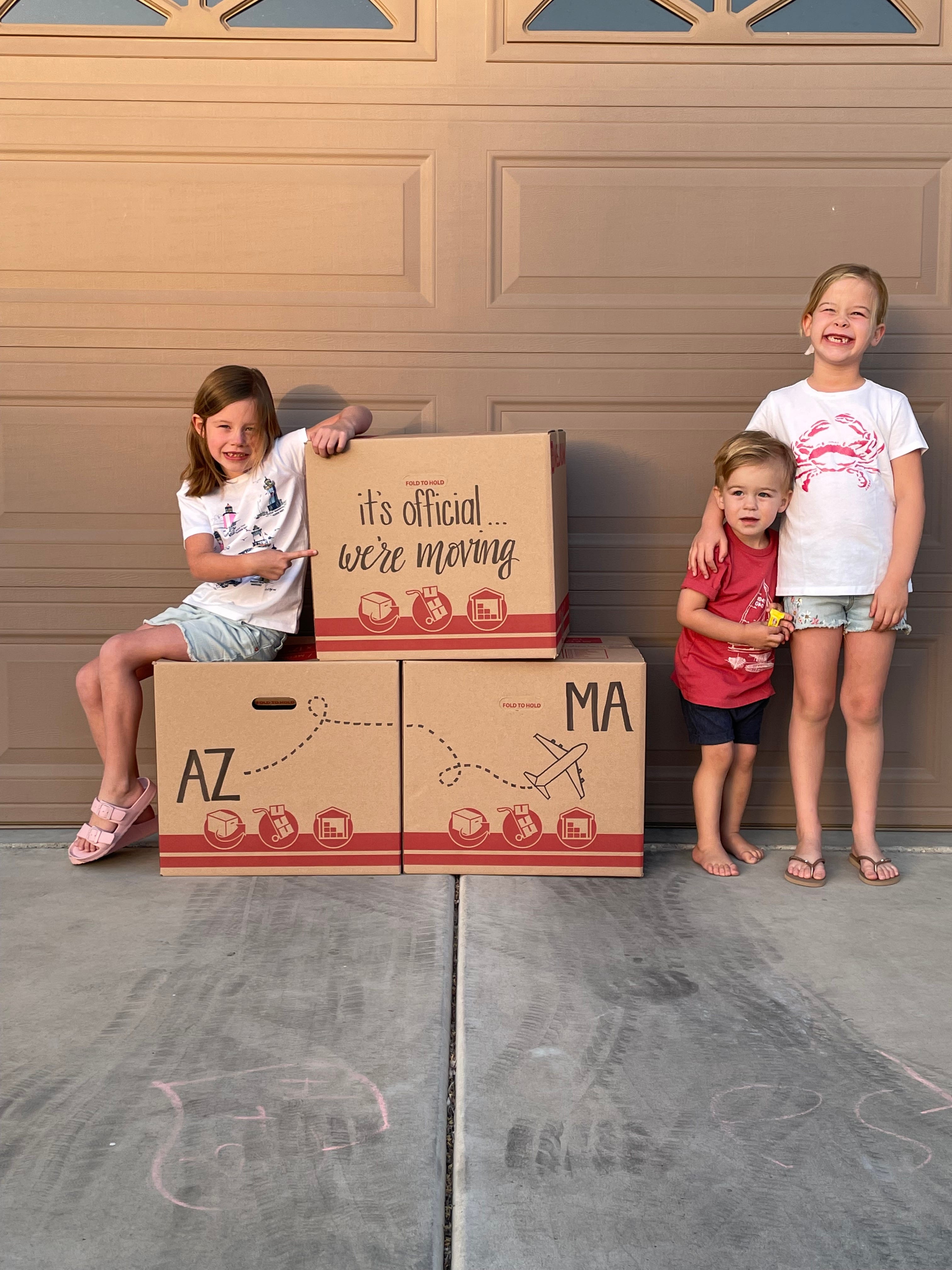
(To be clear, by the way—none of this was possible without some very serious advantages that we were privileged to have: a house with years of built-up equity, selling in a seller’s market, plus remote jobs that allowed us to work from anywhere. I recognize how fortunate we were.)
Not everyone was thrilled with our plan. Some family members were sad or disappointed, naturally; others were irritated. We were told that no matter where you go, there you are, so you might as well stay put. Moving to where you vacation, the logic went, wouldn’t really change anything about your life. You’re still you.
I agreed, to an extent. Laundry and dishes would still pile up. Dance practice would still require weekly taxing around town. We weren’t under the impression our next phase of life would be one long vacation—we just knew we had to do it.
It was hard, then, to explain in terms that made sense to everyone, that despite having a great life in Arizona, something in us longed for a place where we felt truly at home in our bodies and souls. For our more practically minded family, it just didn’t make compute.
In late June, we packed up our stuff and hopped on a flight to Boston. As we landed, we looked out the window to see a rainbow in the distance. It felt like nothing less than a homecoming.

In Mass, our plan went into action. We rented a cottage at Summer Village in Westford—on the aptly named Long Sought-for Pond—where the kids could hang out, play, and swim, while my wife and I, and my mom, who came to visit, went house-hunting before and after work.
For weeks, we combed through real estate listings in the area, visiting open houses and placing bids on homes that sold well above their listing prices.
Then, one day in July, we visited an open house in Stow. I didn’t know much about the town outside of Honey Pot Hill Orchards, which we’d visited several times over the previous summers as bushy-tailed out-of-state tourists. When we pulled up to the Cape-style house, it was surrounded by towering trees and lit up by late-morning sun.
We knew this was the place.
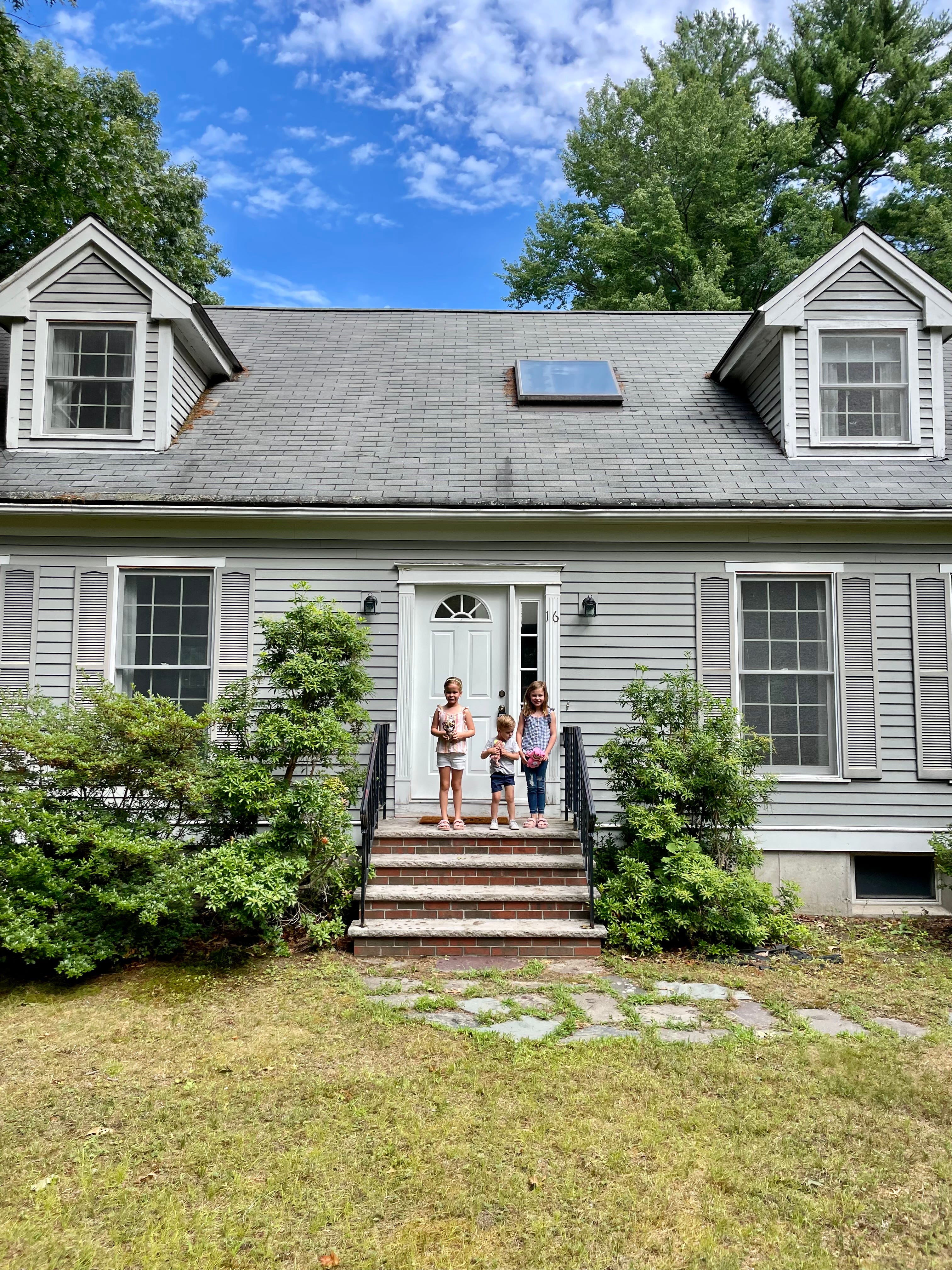
Like most things in this journey, it was hard to explain in words how we felt at that moment, but when we saw the house, we both knew. This was it.
Inside, the home felt light and airy. The windows let in so much sunshine that it was hard not to feel good and fuzzy inside. Upstairs, the trees around the main bedroom made it feel like you were in a sort of treehouse.
We huddled, spoke with our realtor, and quickly placed our bid. A few days later, we received good news: ours had been accepted.
We had a home.
All that was four years ago.
Today, our life is something we never thought we’d have. For years, it felt like a pipe dream meant for someone else.
When we finally made our move, and it seemed to work out, I think we were overcome with a wave of gratitude, appreciation, and abundance that’s still here today. I think it will always be here. I don’t see how it could be otherwise.
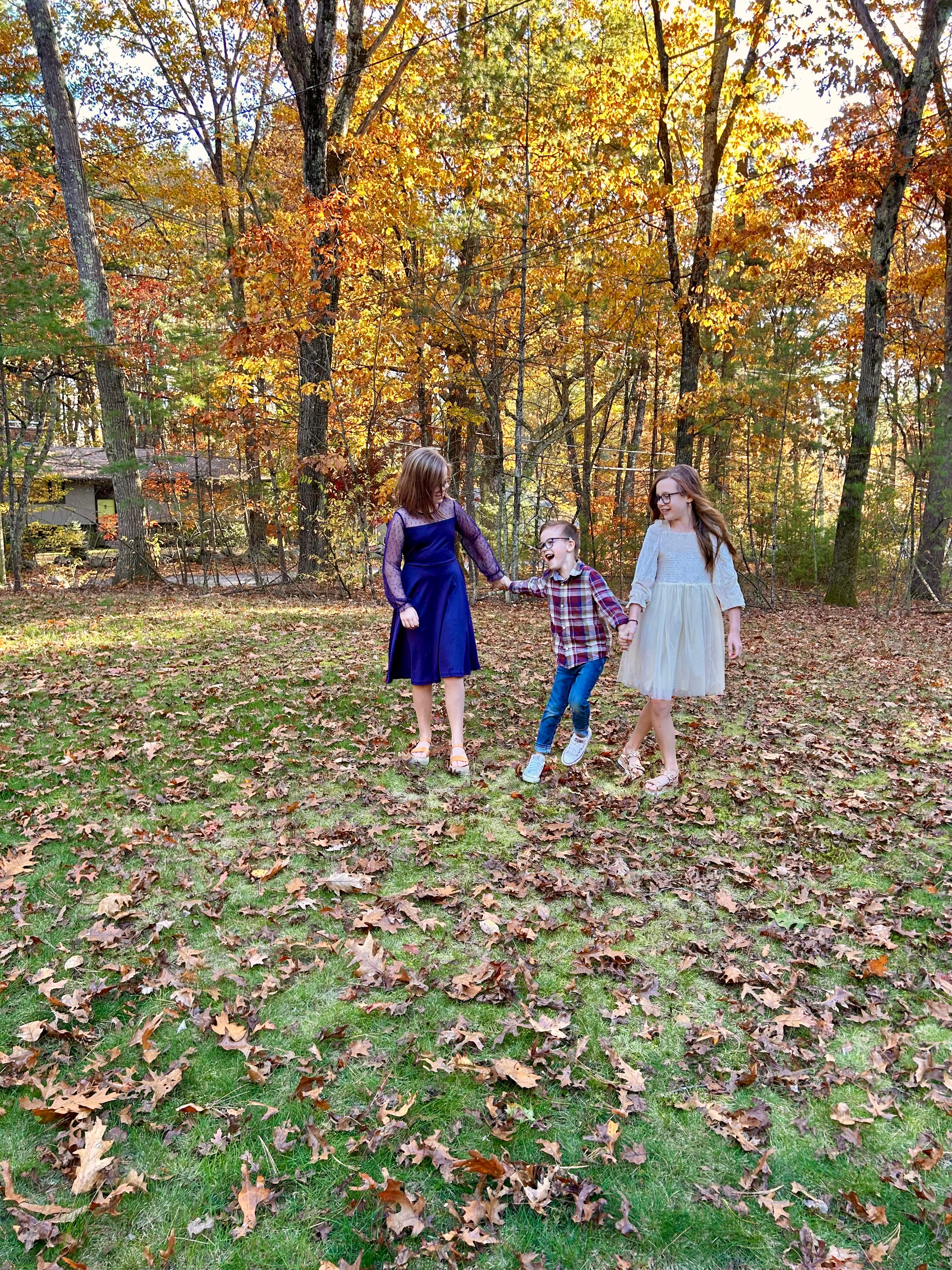
All that leads, finally, to A Deliberate Life.
In the last few years, living in a place and situation that’s felt more aligned with who I am—and we are, as a family—I’ve learned that the more I lean into living deliberately, as Henry David Thoreau put it, the more I feel like myself.
The less I’m on autopilot, and the less I’m acting because of some external pressure or opinion or sway, the more I feel at home in my life.
After a recent rereading of Walden, I got the overwhelming sense that many of the ideas Thoreau wrote about are just as relevant today, if not more so, than they were in the 1840s.
Throughout Walden, I felt like I was having a discussion with someone who understood the challenges and opportunities of life in 2026, despite the passage of 180 years since Thoreau spent his two years, two months, and two days at Walden Pond.
More than anything else, though, I took away one thing from my latest reading of Walden: the idea of paying attention to your life.
A Deliberate Life is my way of paying attention.
It’s an unpolished attempt to explore how the struggles Thoreau wrote about nearly two centuries ago are the same problems we face today: how to live in accordance with one’s true self in a world that’s engineered for distraction, conformity, and consumption. A world that feeds on attention and leaves little room for self-reflection.
Living deliberately today feels increasingly difficult, but I’m optimistic it can be done. And I don’t think it demands a cross-country move, or a cabin in the woods, or some grand escape from modern life. I think it requires quieting the noise around you enough that you can pay attention to what your life is telling you.
Our move, in other words, was one path, not the path. Thoreau believed the same, when he wrote in Walden:
“I would not have any one adopt my mode of living on any account; for, beside that before he has fairly learned it I may have found out another for myself, I desire that there may be as many different persons in the world as possible; but I would have each one be very careful to find out and pursue his own way, and not his father’s or his mother’s or his neighbor’s instead.”
If you can slow down, listen, and pay real attention, I think you can figure out what it means to live deliberately. And whatever that is to you, I don’t think you’ll see it anywhere else.
“You enter the forest at the darkest point, where there is no path,” wrote Joseph Campbell. “Where there is a way or path, it is someone else’s path.”
But there are people who can point toward it. Thoreau was the one who finally made me, and countless others, pay attention. Now, in my own rambling way, I hope to do the same: to point, and to pay attention.
Our life today is far from perfect, and it’s hardly a vacation.
It’s still the chaos of three young kids and never enough time. Endless dishes and laundry, practices and playdates, rushed mornings and exhausted nights. We miss our family like hell. But we know who’s walking through the front door each season to make new memories.
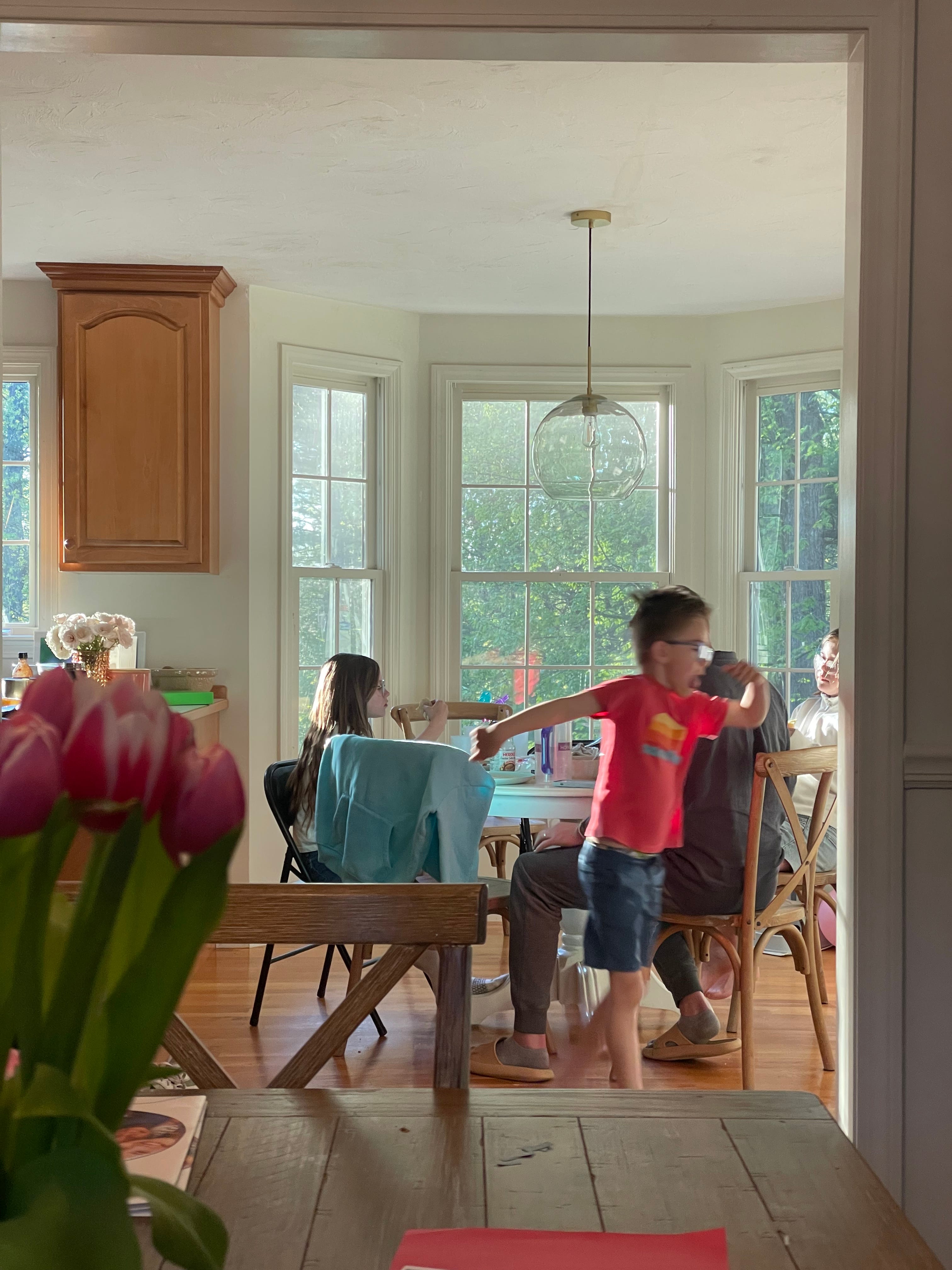
And we know this season doesn’t last forever, so we hold on to the good, the bad, and the exhausting (the unending quest to rid the house of homemade slime, for instance).
The struggles we have now, along with all the good moments, come from a life we mostly chose on purpose. That doesn’t make things easier, necessarily.
But it does bring a sort of clarity that comes from knowing our days, in all their messiness, are aligned to something true to ourselves.
And that feels pretty damn good.